Buddhist Monasteries in India
Why Visit Buddhist Monasteries in India?
India is home to some of the most sacred, living, and historically significant Buddhist monasteries in the world. These monasteries are not just architectural gems; they are living spiritual ecosystems where ancient teachings meet modern seekers.
Whether you’re drawn by the meditative silence, the vibrant festivals, or the immersive cultural learning, these monastic hubs offer a rare gateway to mindfulness, community, and wisdom.
With VisitDalaiLama.com, operated by White Pigeon Holidays LLP, travellers gain ethical, legally guided access to these sacred destinations — with deeper storytelling, not just sightseeing.
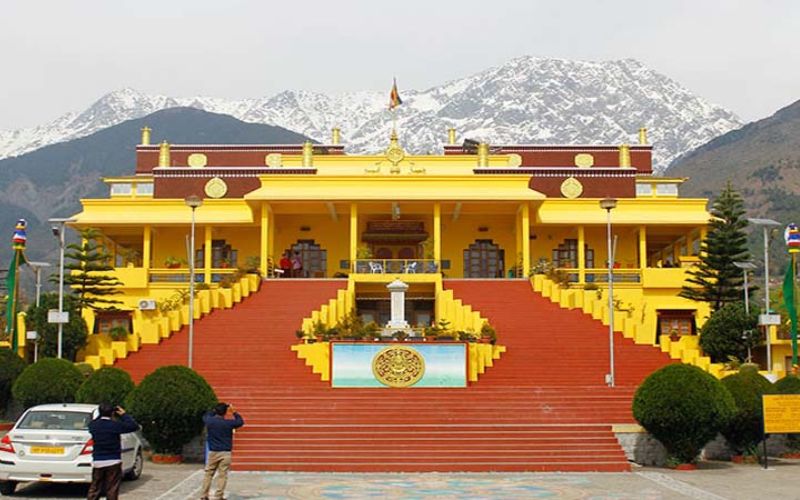
1. Namgyal Monastery, Dharamshala
The Seat of Tibetan Spiritual Culture in Exile
Overview
Located in the misty hills of McLeod Ganj, Namgyal Monastery is not just a temple — it’s a living spiritual hub. Founded in the 16th century and relocated to India with His Holiness the 14th Dalai Lama in 1959, it now serves as his personal monastery and an epicentre of Tibetan Buddhist preservation in exile.
While it remains a functioning monastic institution, it also welcomes spiritual travellers seeking authentic Buddhist experiences. Its calm surroundings and rhythmic chants offer an immersive entry into Tibetan philosophy and practice.
Top Experiences & Highlights
Daily Prayer Rituals: Open to respectful visitors, especially early morning and evening chant sessions.
Teachings: Select public teachings when H.H. the Dalai Lama is in residence (usually March and October)
Meditation Spaces: Calm halls for contemplation and walking meditation around the kora (circumambulation path)
Nearby Cultural Sites:
- Tibetan Museum (excellent for historical context)
- Library of Tibetan Works and Archives (for scholars and seekers)
- Kalachakra Temple (right next to the main complex)
Best For
- Pilgrims looking to connect with Tibetan spiritual traditions
- Cultural travellers wanting deep, immersive experiences
- Mindfulness practitioners and yoga groups seeking more than just retreat centre’s
When to Visit
March to May: Spring brings mild weather and clear skies; good for long stays
October to November: After the monsoon, the air is fresh and the tourist flow is moderate
Avoid: Late June to September (monsoon season) and December–January (very cold)
Travel Tip
Stay at the hotels near Temple Road for easy access to temple compound and local markets and eating joints. You can also request updates via the official Dalai Lama schedule website for upcoming public teachings.
2. Gyuto Monastery, Dharamshala
Sound & Silence: The Sacred Chants of Modern Tantra
Overview
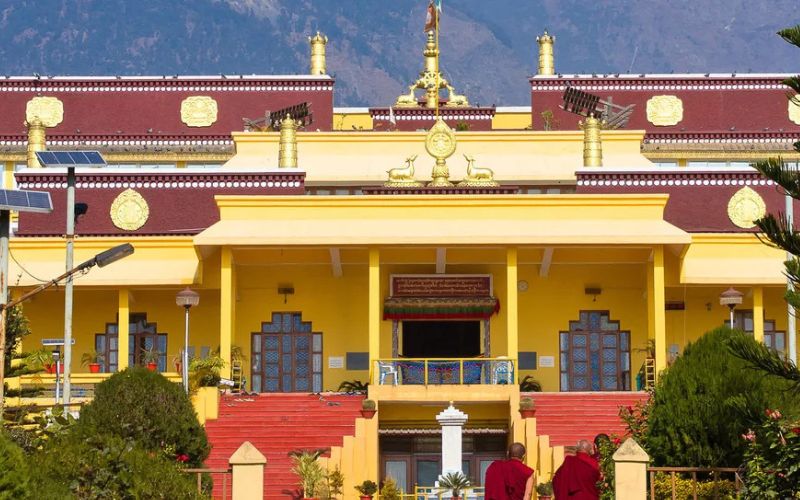
Renowned for its deep overtone chanting and tantric practice lineage, Gyuto Monastery is located in Sidhbari near Dharamshala. It is a modern reconstruction of one of Tibet’s most sacred tantric colleges. Its golden-roofed temple and scenic views make it a quiet favourite for spiritually inclined travelers.
Top Experiences & Highlights
- Harmonic Tantric Chanting
- Gold-roofed Main Hall
- Dhauladhar Range Views
- Public rituals during Tibetan festivals
Best For
- Sound meditation lovers
- Buddhist philosophy enthusiasts
- Spiritual seekers and yoga groups
When to Visit
- March–June, September–November
- Avoid monsoon and deep winter
Travel Tip
Morning chants are more intimate; bring a light shawl for early chill.
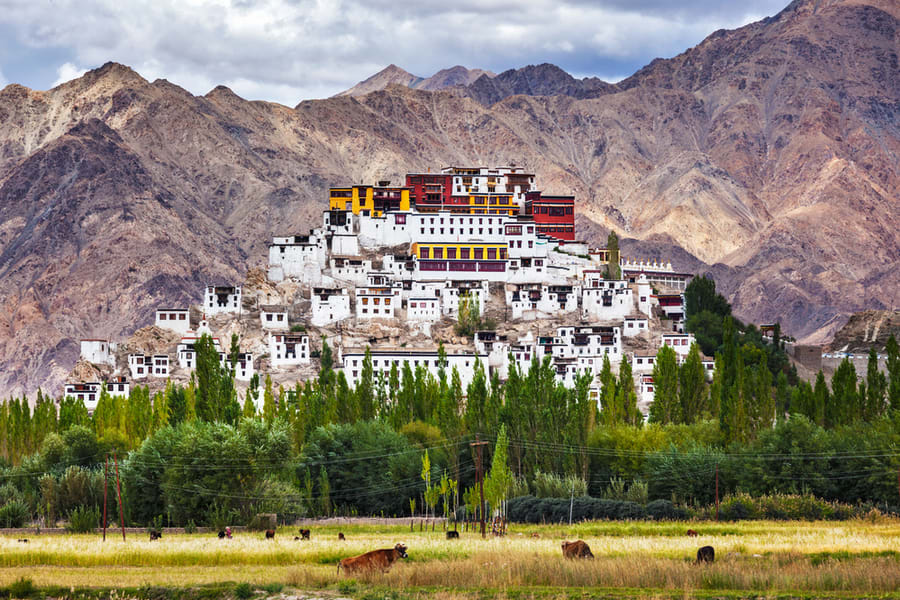
3. Thiksey Monastery, Ladakh
The Mini Potala Palace of India
Overview
Thiksey Monastery is one of Ladakh’s largest and most visually iconic gompas, resembling the Potala Palace of Lhasa. Built across 12 stories on a hilltop, it houses ancient scriptures, a 15-meter-tall statue of Maitreya Buddha, and daily rituals open to the public.
Top Experiences & Highlights
- Sunrise prayers with panoramic views
- Maitreya Buddha Hall
- Classic Tibetan architecture
- Small museum and local crafts shop
Best For
- First-time visitors to Ladakh
- Cultural photographers
- Family spiritual travelers
When to Visit
- May–September (summer season)
- Avoid winters (snow blocks access)
Travel Tip
Arrive by 6:30 am for morning prayers and avoid midday crowds.
4. Diskit Monastery, Nubra Valley (Ladakh)
The Home of the Giant Maitreya and Eternal Peace
Overview
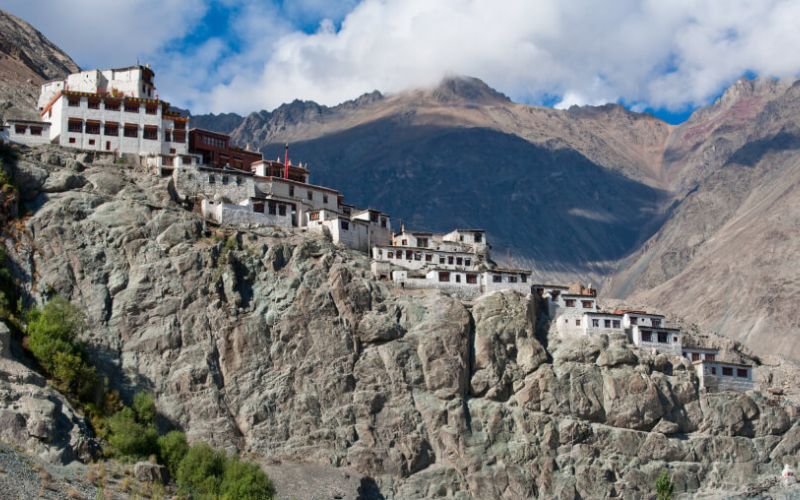
Diskit Gompa is the oldest and largest monastery in Nubra Valley, famous for its towering 32-meter statue of the Maitreya Buddha. Perched above the village, it offers breath-taking views of the valley and teaches that peace can be found even in barren landscapes.
Top Experiences & Highlights
- Giant Maitreya Buddha
- Valley-view meditation zones
- Dosmoche Festival (Feb)
- Hidden prayer rooms for quiet reflection
Best For
- Road trippers via Khardung La
- Nature-loving pilgrims
- Silent retreat enthusiasts
When to Visit
- May to September only (closed in winters)
Travel Tip
Combine your visit with a camel safari in nearby Hunder sand dunes.
5. Key Monastery, Spiti Valley (Himachal Pradesh)
Overview
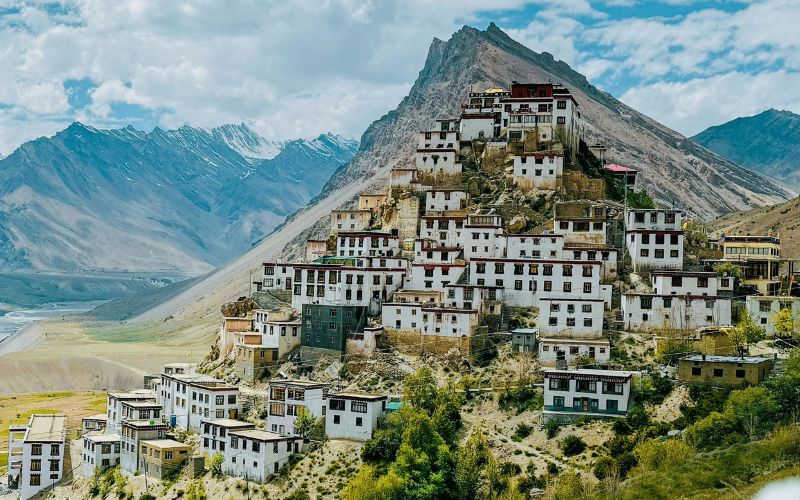
Key (or Kee) Monastery is a 1,000-year-old fortress-like gompa perched at 13,668 feet. It is the crown jewel of Spiti and the spiritual anchor of this remote, high-altitude desert. Famous for its layered architecture and library of ancient manuscripts, Key is where silence becomes spiritual.
Top Experiences & Highlights
- Multi-tiered Cliffside design
- Butter lamp-lit evening chants
- Stay options at basic guesthouses nearby
- Panoramic rooftop views
Best For
- Adventurous spiritual seekers
- Minimalist traveller’s
- Himalayan explorers
When to Visit
- June to September
- Closed in winters due to snow
Travel Tip
Acclimatize properly in Kaza before visiting. Carry thermals even in summer.
6. Tabo Monastery, Spiti Valley (Himachal Pradesh)
The Ajanta of the Himalayas
Overview
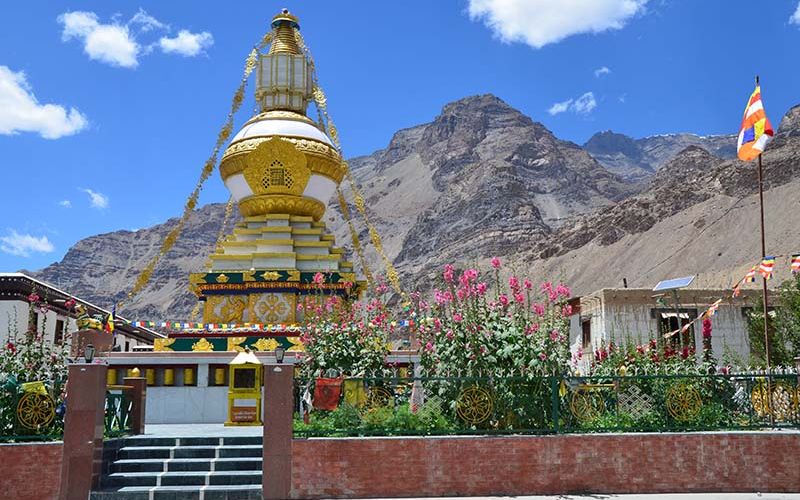
Over 1,000 years old, Tabo is often called the “Ajanta of the Himalayas” due to its murals, manuscripts, and ancient cave meditation rooms. Founded in 996 CE, it is a living repository of Tibetan Buddhist art and was personally visited and praised by His Holiness the Dalai Lama.
Top Experiences & Highlights
- Ancient temple murals and thangkas
- Underground meditation caves
- Women-friendly monastery environment
- Annual festivals and mask dances
Best For
- Heritage lovers and scholars
- Pilgrims seeking spiritual art
- Slow-travelers exploring the Buddhist circuit
When to Visit
- June to September
- Closed in winters
Travel Tip
Stay in nearby guesthouses and join evening tea with monks.
7. Dalai Lama Temple Complex, McLeod Ganj (Tsuglagkhang)
The Spiritual Nerve Center of Modern Tibetan Buddhism
Overview
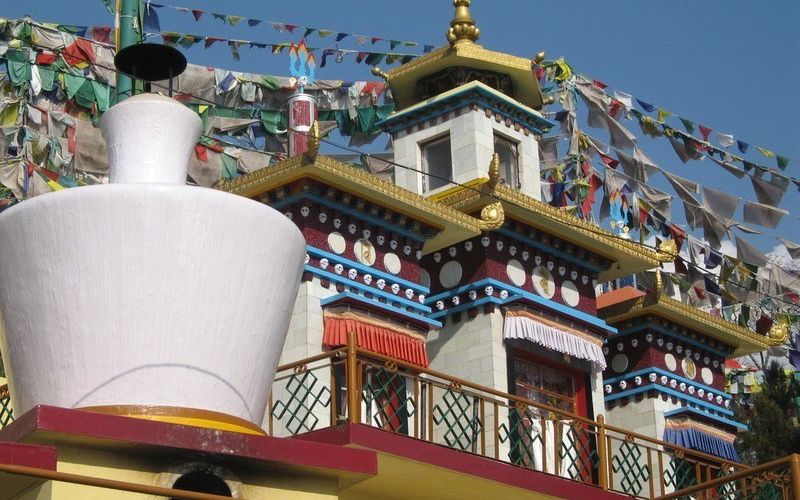
The Tsuglagkhang Complex is the official residence and spiritual centre associated with His Holiness the 14th Dalai Lama when he is in Dharamshala. It houses the Dalai Lama Temple, Namgyal Monastery, and the Kalachakra Temple, and welcomes spiritual travellers from across the world.
Open to the public for kora (circumambulation), meditation, and cultural observation, this is the beating heart of Tibetan spirituality in India.
Top Experiences & Highlights
- Open-air Kora Trail: Spin prayer wheels and walk with monks
- Dalai Lama Temple: A peaceful prayer space surrounded by pilgrims
- Kalachakra Temple & Buddhist murals
- Watch debates and rituals during public gatherings
Best For
- Spiritual travellers seeking meaning, not monuments
- Cultural researchers & photographers
- Visitors hoping to understand Tibetan resilience
When to Visit
- March–May & October–November
- Avoid winter & monsoon
Travel Tip
Public teachings by H.H. the Dalai Lama (if scheduled) require online registration. Check official Dalai Lama website for updates.
8. Hemis Monastery, Ladakh
The Festival Capital of Ladakhi Buddhism
Overview
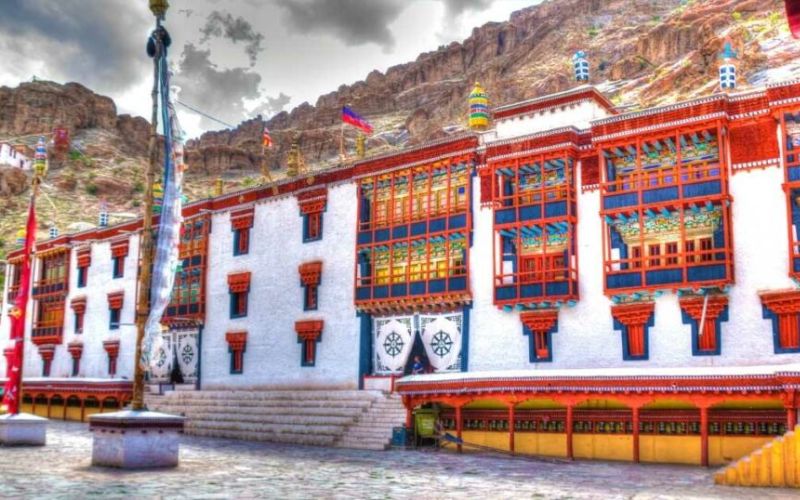
Nestled deep in the Indus Valley, Hemis Monastery is one of the most prominent and wealthiest gompas in Ladakh. Belonging to the Drukpa lineage, it hosts the iconic Hemis Festival, a colorful display of tantric mask dances, music, and monastic devotion that draws thousands each year.
The setting, flanked by rugged cliffs and silence, makes it a powerfully meditative stop even when the festival is not in season.
Top Experiences & Highlights
- Hemis Festival (June/July): Cham dances, masks, and sacred rituals
- Meditation caves and courtyards
- Beautiful 11th-century murals and relics
- Giant Thangkas unveiled every 12 years
Best For
- Cultural festival-goers
- Tantric Buddhism explorers
- Himalayan photojournalists and seekers
When to Visit
- June–September
- Festival: Varies (check Ladakh calendar)
Travel Tip
Arrive early or stay overnight nearby to avoid heavy festival crowds.
9. Alchi Monastery, Ladakh
The Hidden Jewel of Indo-Tibetan Buddhist Art
Overview
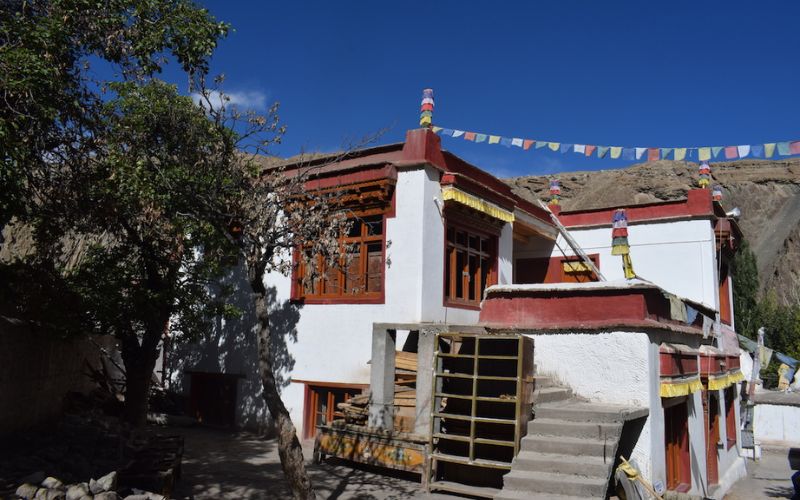
Alchi is unique. It’s not perched high on a cliff but nestled in a quiet valley near the Indus River. Dating back to the 10th–11th centuries, Alchi Monastery is famous for its Kashmiri-influenced Buddhist art, wall paintings, and wood carvings that predate most Tibetan gompas in the region.
Managed by monks from Hemis, it’s less of an active monastery and more a preserved heritage site — ideal for culture-focused travellers.
Top Experiences & Highlights
- UNESCO-worthy murals & mandalas
- Chortens, prayer halls, and the Sumtsek temple
- Easy accessibility on the Leh–Kargil road
- Excellent for heritage and architectural photography
Best For
- Art historians & photographers
- Cultural travellers
- Slow-travel explorers
When to Visit
- May to September
- Avoid winters
Travel Tip
Visit early morning for best lighting inside the dimly lit halls.
10. Mahaparinirvana Temple, Kushinagar
Where the Buddha’s Journey Ended — and Ours Begins
Overview
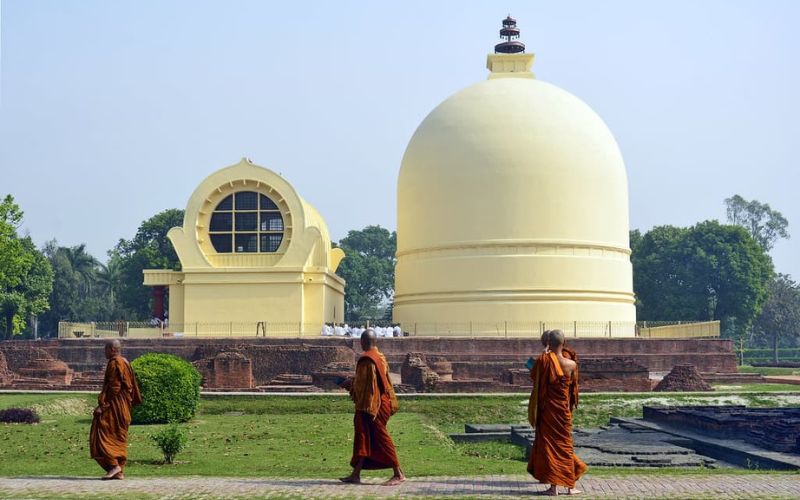
Located in Kushinagar, Uttar Pradesh, the Mahaparinirvana Temple is believed to mark the site where Gautama Buddha attained Parinirvana (final nirvana after death). This sacred destination is a key stop in the Buddhist pilgrimage circuit and draws monks, scholars, and devotees from across the world.
A peaceful reclining Buddha statue — carved in stone — lies within the temple, representing the final moments of enlightenment and release from suffering.
Top Experiences & Highlights
- See the 6.1-meter reclining Buddha statue from the Gupta period
- Participate in candlelight chanting ceremonies during Buddhist festivals
- Visit the Nirvana Stupa and surrounding ruins of monasteries
- Meditate under the Bodhi trees planted by visiting monks from multiple countries
Best For
- Pilgrims following the Buddha’s final path
- History lovers interested in early Buddhist archaeology
- Travelers seeking emotional reflection and spiritual closure
When to Visit
- October to March: Ideal weather for meditation and touring
- April-May (Buddha Purnima): Major rituals and pilgrim gatherings
Travel Tip
Visit early in the morning for a peaceful experience before the tour buses arrive. Combine with a visit to Vaishali and Lumbini (in Nepal) for a fuller pilgrimage circuit.
11. Zang Dhok Palri Phodang, Kalimpong
A Jewel of the Nyingma Tradition in the Eastern Hills
Overview
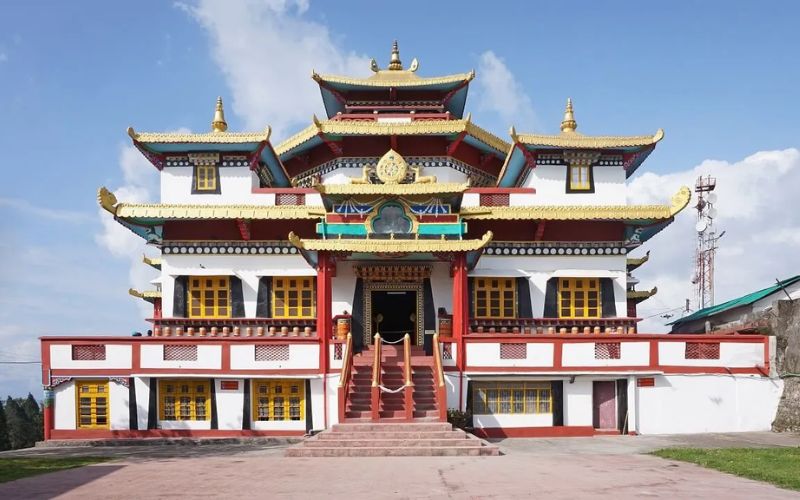
Nestled atop Durpin Hill in Kalimpong, West Bengal, Zang Dhok Palri is a quiet gem representing the Nyingma school of Tibetan Buddhism. Built after the 1959 Tibetan diaspora, it houses rare scriptures and sacred texts that were brought to India from Tibet.
The monastery’s golden spires, intricate murals, and panoramic views make it an enriching stop for spiritually inclined travellers.
Top Experiences & Highlights
- Home to over 100 volumes of rare Buddhist scriptures (Kangyur)
- Traditional Tibetan artwork and thangkas in prayer halls
- Panoramic views of the Kalimpong valley and Himalayan foothills
- Peaceful courtyard for personal meditation
Best For
- Cultural travellers seeking offbeat spiritual stops
- Buddhist philosophy readers
- Nyingma lineage followers
When to Visit
- October to March: Best weather for clear views and peaceful stays
- Avoid: Monsoon season (June–September)
Travel Tip
Climb to the top floor for the best sunrise views over the valley. It’s also less crowded on weekdays.
12. Rumtek Monastery, Sikkim
Crown Jewel of the Karma Kagyu Lineage
Overview
Located just 24 km from Gangtok, Rumtek Monastery is the largest monastery in Sikkim and the international seat of the Karma Kagyu lineage. It mirrors the original Tsurphu Monastery in Tibet and offers a spectacular blend of ritual, architecture, and sacred energy.
It’s also home to vibrant rituals, protective guardians, and philosophical debates among monks.
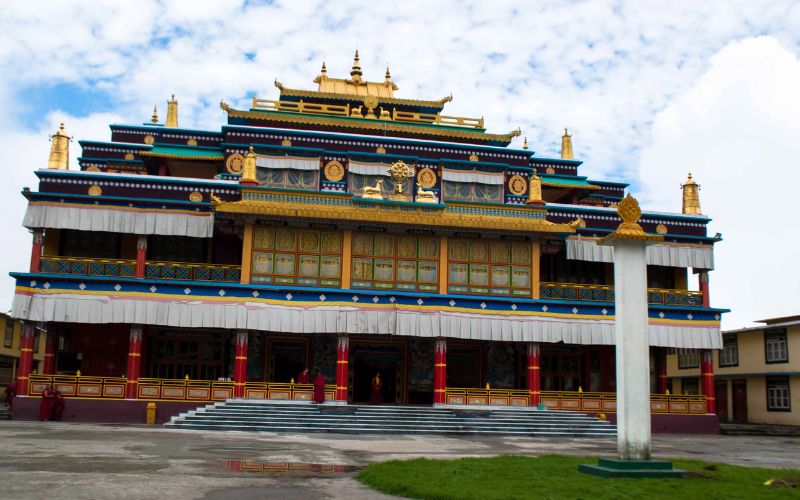
Top Experiences & Highlights
- Watch intricate Cham mask dances during festivals
- Meditate in the Golden Stupa Hall
- Explore the Nalanda Institute for Higher Buddhist Studies
- Stunning photo ops of gilded roofs and prayer flags against snowy peaks
Best For
- Seekers interested in lineage-based Buddhism
- Architecture and design lovers
- Spiritual photographers and artists
When to Visit
- April to June and October to December
- Avoid: Monsoons (heavy rainfall and landslides)
Travel Tip
Visit early to avoid fog and get monastery access during chanting hours. Respect closed sections reserved for advanced retreats.
13. Mindrolling Monastery, Dehradun
Modern Majesty with Ancient Roots
Overview
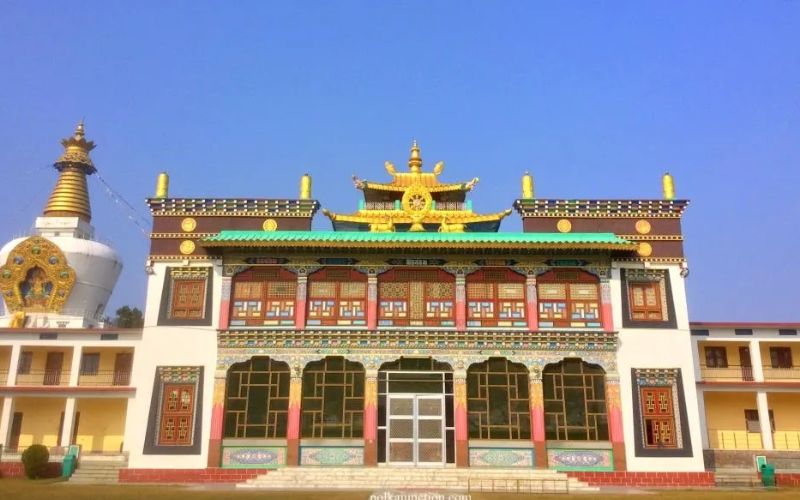
Founded in 1965, Mindrolling is one of the largest Nyingma monasteries outside Tibet. Known for its towering Great Stupa of Buddha, this spiritual campus is home to over 300 monks, intricate art, and an exceptional ambiance for reflection.
The monastery is ideal for families and beginners due to its visual accessibility and open environment.
Top Experiences & Highlights
- Visit the 185-foot Great Stupa of Lord Buddha
- Admire intricate murals and statues inside the prayer halls
- Enjoy quiet walks in the gardens and attend Sunday chanting
- Learn at the Ngagyur Nyingma Institute on-site
Best For
- Families and first-time spiritual travellers
- Architecture lovers
- Devotees of the Nyingma tradition
When to Visit
- October to April (clear weather)
- Avoid: June–September (humid and rainy)
Travel Tip
Try the small Tibetan cafés nearby for traditional momos and butter tea post-visit.
14. Ganden Jangtse & Shartse Monasteries, Mundgod, Karnataka
Twin Pillars of Monastic Preservation in Exile
Overview
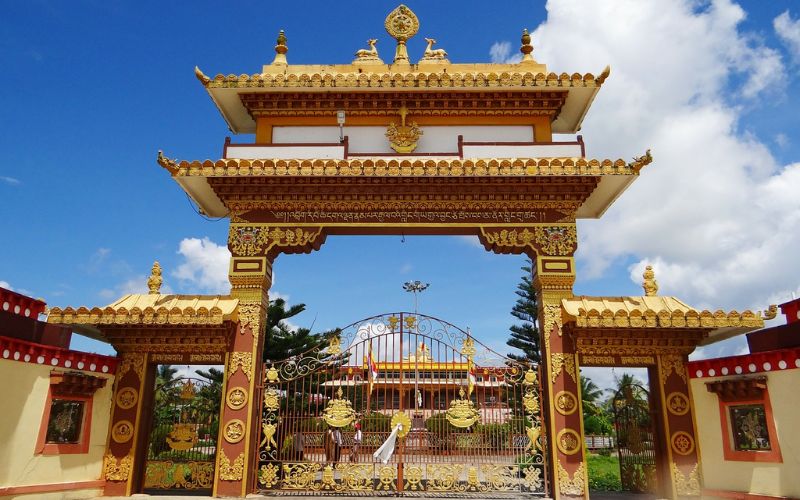
These twin monasteries are part of the broader Ganden tradition and were re-established in Mundgod after fleeing Tibet. They form a critical bridge between old-world Tibetan education and modern Indian sanctuary.
Top Experiences & Highlights
- Observe teaching sessions, rituals, and community debates
- Explore temple architecture inspired by Tibetan originals
- Learn from monks through informal talks and prayer gatherings
Best For
- Buddhist scholars
- Devotional travellers seeking deeper learning
- Cultural immersion seekers
When to Visit
- October to February: Clear skies and welcoming weather
- Avoid: Heavy rains in July–August
Travel Tip
Try local Tibetan vegetarian food at nearby settlements; it’s flavourful and sustaining.
15. Drepung Loseling Monastery, Mundgod, Karnataka
Reviving Tibetan Scholarship in Exile
Overview
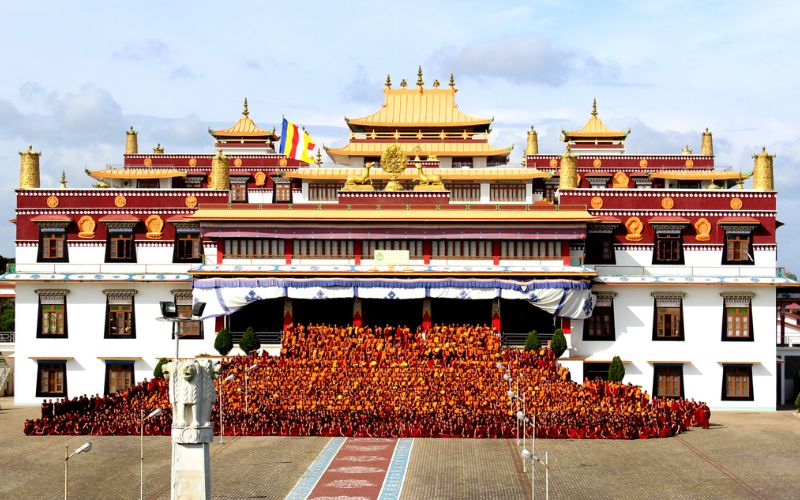
Originally established in Tibet, Drepung Loseling Monastery was re-established in Mundgod as part of the Doeguling Tibetan Settlement. It’s now one of the largest centre’s of monastic learning in India, training hundreds of monks in the Gelug tradition and welcoming scholars from around the world.
Top Experiences & Highlights
- Witness monastic debates
- Early morning chanting open to respectful visitors
- Visit the monastic library for glimpses of Tibetan scholastic life
Best For
- Spiritual scholars
- Cultural educators
- Pilgrims interested in structured Buddhist study
When to Visit
- November to February
- Avoid April to July (hot weather and monsoon)
Travel Tip
Pair this with Ganden and Sera Monasteries in the same settlement for a full educational circuit.
16. Sera Monastery, Bylakuppe, Karnataka
A Thriving Hub of Tibetan Monastic Learning
Overview
Located in Bylakuppe, Sera Monastery is divided into Sera Jey and Sera Mey — both major institutions of the Gelug school. This is one of India’s most active centers of Tibetan learning, hosting thousands of monks, annual festivals, and international visitors.
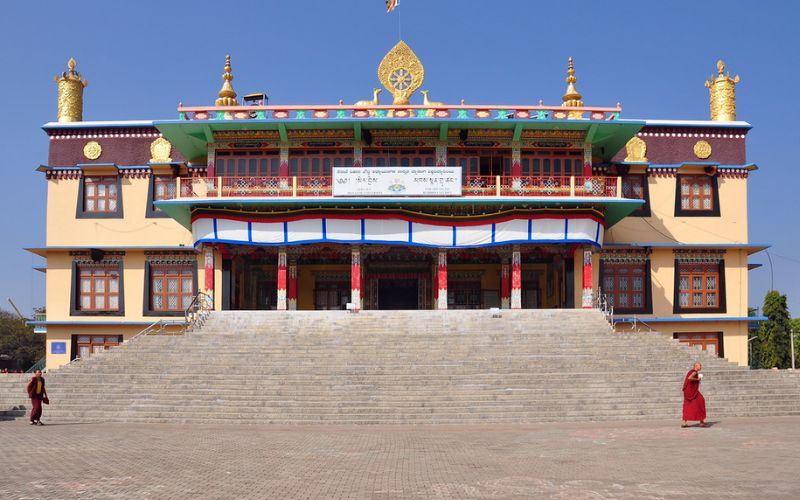
Top Experiences & Highlights
- Debates: Highly engaging monastic debate sessions in open courtyards
- Tour of monk residences and temples
- Visit nearby Namdroling Golden Temple (Nyingma lineage)
Best For
- Academic spiritual seekers
- Festival visitors (e.g. during Losar)
- Yoga groups wanting cultural add-ons
When to Visit
- December to March
- Avoid: Monsoon and May (heat)
Travel Tip
Arrive by 9 AM to witness chanting rituals. Many guesthouses near the complex are run by Tibetans.
Ready to Begin?
Whether you’re curious about Buddhist heritage, planning a mindful retreat, or just seeking stillness in the Himalayas…