Buddhist Festivals
1. Buddha Purnima (Vesak / Vaisakha Day)
Full Moon of Vaisakha (April–May)
Bodh Gaya, Sarnath, Ladakh, Dharamshala, Sikkim
Marks the birth, enlightenment, and Mahaparinirvana (passing) of Gautama Buddha — the most sacred day in the Buddhist calendar.
What You’ll Witness:
- Monks chanting the Dhammapada
- Oil lamps and lotus offerings under the Bodhi Tree
- Public sermons and community dana (giving) programs
- Peace marches and spiritual assemblies
Travel with VisitDalaiLama.com for curated Vesak programs in Bodh Gaya or Sarnath, with legal access, meaningful context, and serene accommodation near pilgrimage zones.
2. Asalha Puja (Dhamma Day)
July (Full Moon of Ashadha)
Sarnath, Bodh Gaya, Karnataka
Commemorates Buddha’s First Sermon at Sarnath, setting the Wheel of Dharma in motion.
Key Highlights:
- Re-enactments of the Dhammacakkappavattana Sutta
- Mindfulness walks around the Dhamek Stupa
- Retreats and teachings in monasteries
- Ceremonial release of birds and symbolic peace acts
With us, visit Sarnath during this time for immersive learning and introspection.
3. Vassa (Rains Retreat) & Pavarana Day
Begins after Asalha Puja for 3 lunar months
Theravāda monasteries, Karnataka, Bodh Gaya, Dharamshala
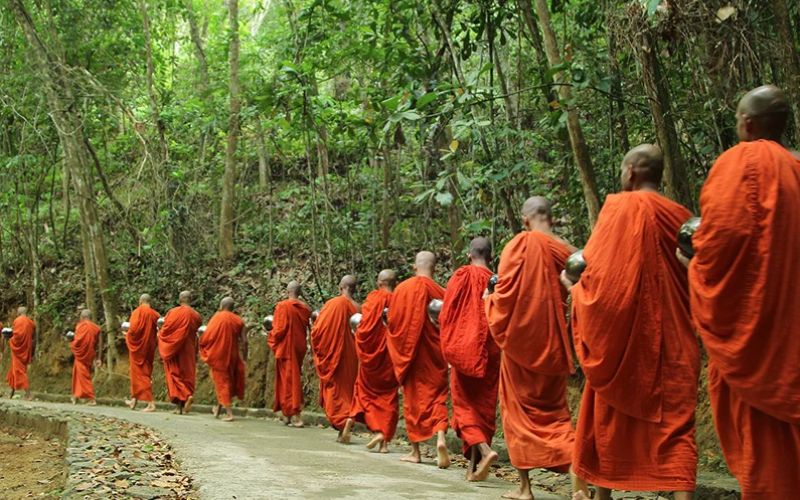
A monastic retreat observed during the rainy season. Monks remain in one place to practice, meditate, and teach.
Key Events:
- Night prayers, almsgiving, and silent retreats
- On Pavarana Day, monks conclude their retreat and express spiritual accountability.
With VisitDalaiLama.com, learn about the retreat system, support monastic communities ethically, and attend temple events in Karnataka or Bodh Gaya.
4. Magha Puja (Sangha Day)
Full Moon in February (Magha)
South India, Theravāda temples, Ladakh
Commemorates a spontaneous gathering of 1,250 arahants who met the Buddha without summons. Symbolizes community, unity, and wisdom.
Features:
- Night-long meditation
- Monastic robe offerings
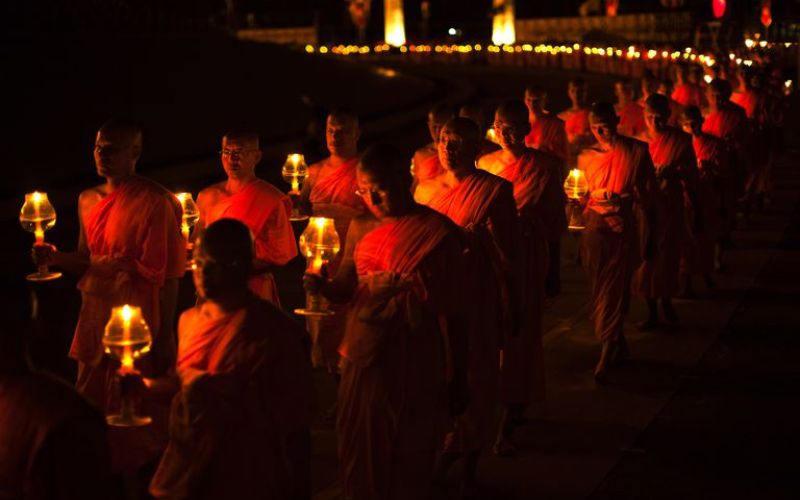
- Butter lamp ceremonies
Travel Tip: A serene time to visit Sera or Drepung Monastery in Karnataka or quiet temples in Ladakh.
5. Losar (Tibetan New Year)
February/March (Lunar Calendar
Dharamshala, Bylakuppe, Ladakh
A 3-day celebration of renewal, purification, and cultural pride, deeply rooted in Tibetan Buddhism.
Events You’ll See:
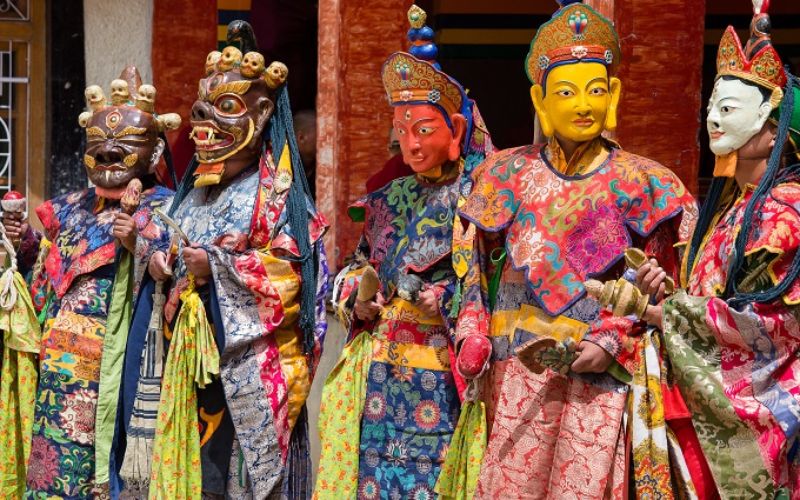
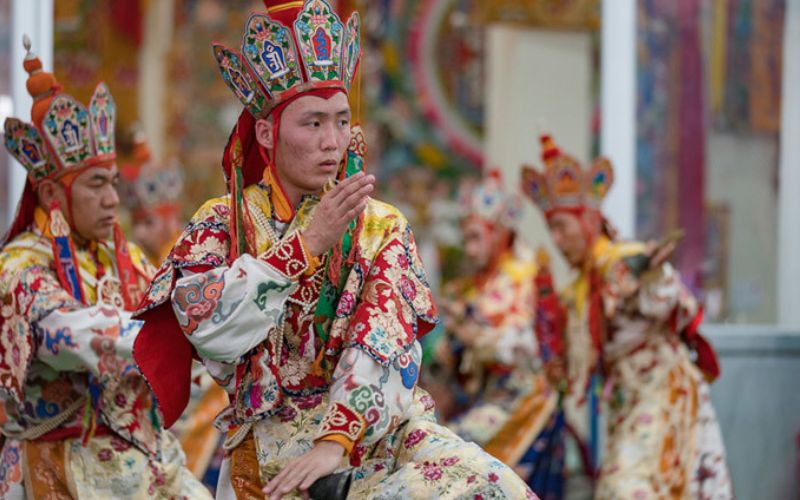
- Cham dances with elaborate masks and symbolism
- Family rituals to clear misfortunes
- Offering of Torma (ritual cakes)
- Debates and prayer ceremonies
Celebrate Losar with Tibetan monks and local families through our immersive cultural programs.
6. Monlam Chenmo (The Great Prayer Festival)
Feb–March (Post Losar)
Bodh Gaya, Dharamshala, Ladakh, Karnataka
A Mahāyāna festival of collective prayers, begun by Tsongkhapa, founder of the Gelug school.
Why It’s Special:
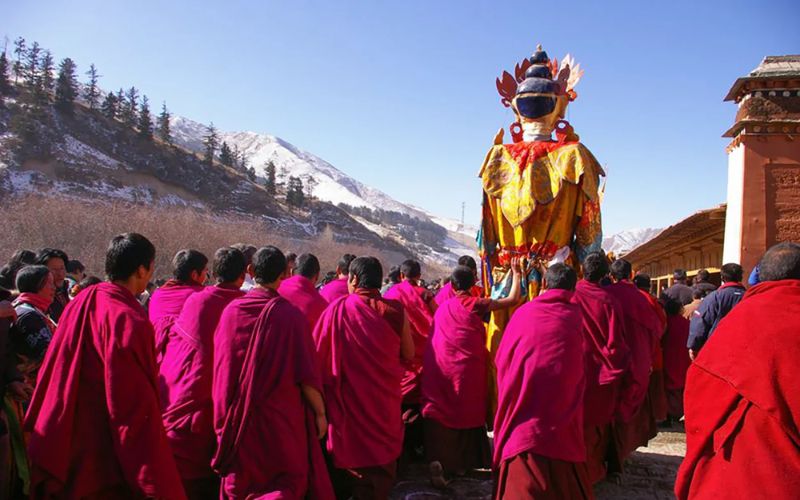
- Monks gather for mass recitation of sutras
- Long-life prayers for all living beings
- Sand mandalas and butter sculpture offerings
VisitDalaiLama.com provides priority access to key monasteries where Monlam is observed with solemnity and beauty.
7. Kalachakra Initiation Festival
(Occasional)
Variable – Held when hosted by Dalai Lama or senior lama
Bodh Gaya, Amravati, Ladakh
A rare tantric empowerment ceremony rooted in the Kalachakra Tantra — symbolizing time, cosmos, and inner peace.
Ritual Highlights:
- Construction and destruction of Kalachakra mandala
- Massive teachings attended by thousands
- Presence of top spiritual leaders (if organized)
Note: While VisitDalaiLama.com does not offer entry to Kalachakra itself, we help travellers experience the cultural setting around it with complete legal boundaries and spiritual insight.
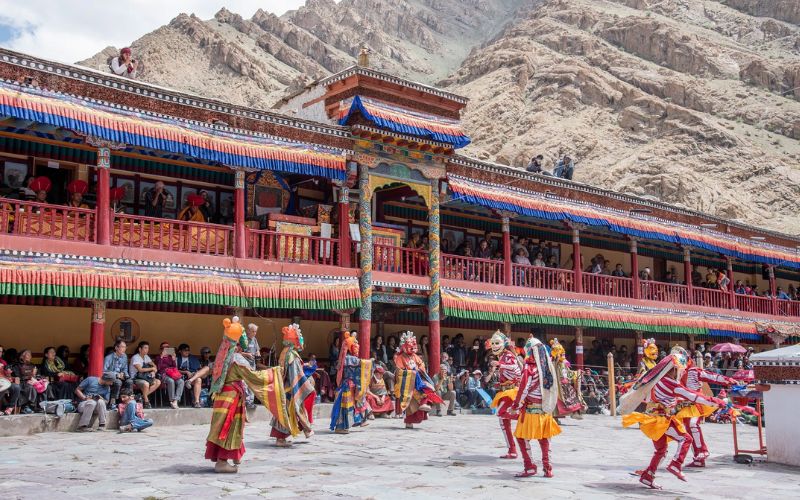
8. Hemis Tsechu (Ladakh)
June/July
Hemis Monastery, Ladakh
One of the grandest Buddhist festivals in the Himalayas, honoring Guru Padmasambhava (Guru Rinpoche).
Why You Can’t Miss It:
- Masked Cham dances narrating Buddhist tales
- Display of the rare Thangka of Guru Rinpoche
- Folk music, local Ladakhi food, and market fairs
- Devotion meets performance under Himalayan skies
With White Pigeon Holidays LLP, we arrange eco-sensitive access to this high-altitude spectacle.
9. Ullambana (Ancestor’s Day / Ghost Festival)
August/September (15th day of 7th lunar month)
Select monasteries & Mahāyāna centers
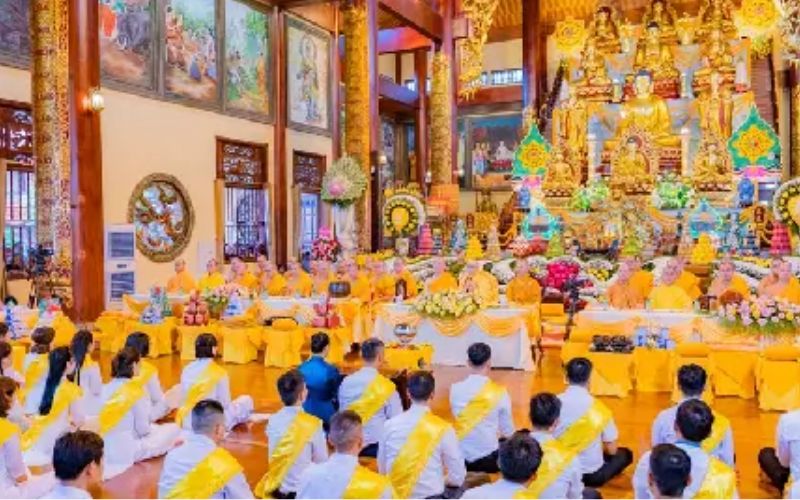
Commemorates liberation of ancestors’ suffering through offerings, chanting, and compassion rituals.
Special Practices:
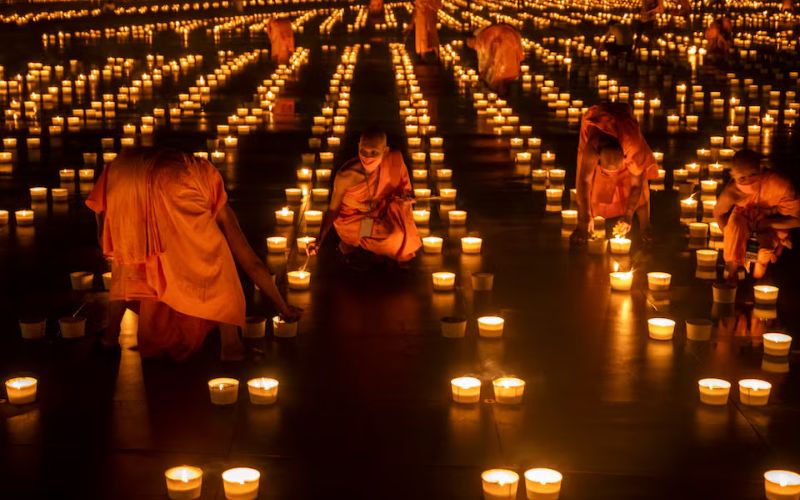
- Lanterns for the deceased
- Pindapata (food offerings)
- Sutra recitation for karmic relief
VisitDalaiLama.com includes optional ancestral rituals in its spiritually guided journeys.
10. Kathina Ceremony (Robe Offering Day)
October–November (end of Vassa)
Theravāda monasteries
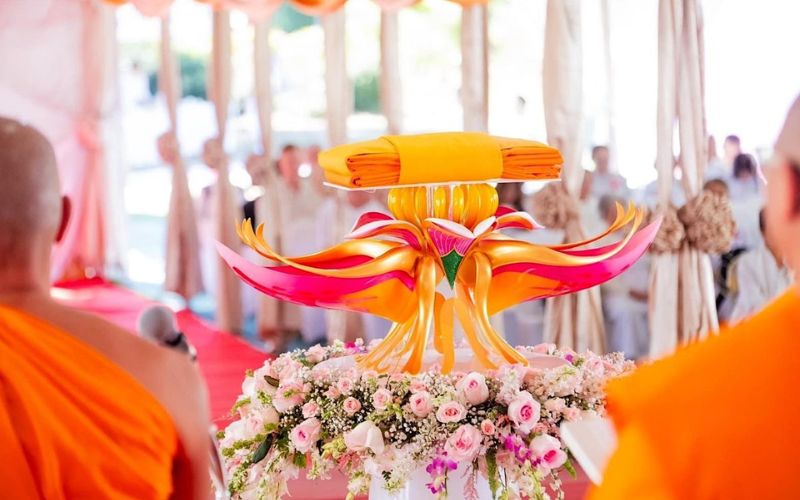
Monks receive robes and essentials from lay devotees — one of the most meritorious acts in Buddhist tradition.
Travelers can respectfully:
- Participate in robe donations
- Learn about dāna (generosity) in action
- Attend community feasts with monks
Why Join These Festivals With VisitDalaiLama.com / White Pigeon Holidays LLP?
- Deep Cultural Access – not just photos, but understanding
- Festival-Aligned Itineraries – plan your entire journey around sacred events
- Ethical Participation – no disruption, only immersion
- Locally Guided – join ceremonies with the help of trusted hosts and community partners
- Spiritual Legality – no misuse of images, no fake blessings, no false promises
Transparency & Respect & Disclaimers
- VisitDalaiLama.com is an independent tourism platform owned and operated by White Pigeon Holidays LLP. We are not a monastery, NGO or religious organization. We are a licensed tourism business under Indian Law
- We are not affiliated with His Holiness the Dalai Lama (Past , Present or Future) , his office, or any monastery , teacher , or Institution. (Please refer our terms and conditions)
- Cross-border political/religious disputes
- The domain name is used thematically to refer to public teachings, Buddhist heritage, and pilgrimage sites
- All tours, retreats and itineraries are independent, educational, and designed with cultural respect
- No images, voice, or likeness of His Holiness (Past, Present or Future) are used in any promotional materials.
- All travel programs are cultural and educational in nature and we monetize logistics-based travel offerings, including Itineraries, Guided experiences, Educational storytelling & Cultural resources
- All guests are responsible for their own understanding of these terms before engaging with our content or services.